


From Tribeca Film Festival, the director (Mari Sanders) and lead actor (an spectacular Daan Buringa) reflect on vulnerability, anger, accessibility on set, and why more than disability Stand Up is a story of identity.
The Interview
Last Sunday, from New York at the Tribeca Film Festival, we joined virtually with director Mari Sanders and lead actor Daan Buringa (Xander) following the premiere of Stand Up, part of the festival’s official international competition.
There are films that arrive quietly and stay like a pulse under the skin. Stand Up is ine of them. One where humor and grief coexist without asking permission, where identity is not resolved but continuously rebuilt. Before the interview begins, the feeling is already there: something tender, fun and at the same time full of hope.
“Excited” is the only word that seems close enough to describe the anticipation of this conversation, not because an interview expectation, but because of connection. Stand Up is one of those films that doesn’t end in the 90 minutes long; it keeps moving through you, asking you to rethink what you thought you understood about vulnerability, anger, and the way you find your identity in the context of disability.
The film follows Vera (Lucia Zemene), who, after an accident, loses one of her legs and begins the long process of rebuilding identity with a wheelchair. In that fragile space of reconstruction, she meets Xander, played by Daan Buringa, a young man shaped by contradiction, humor, resistance, and an anger that refuses to be simplified. What begins as friction slowly turns into recognition. And the beauty of vulnerability started.
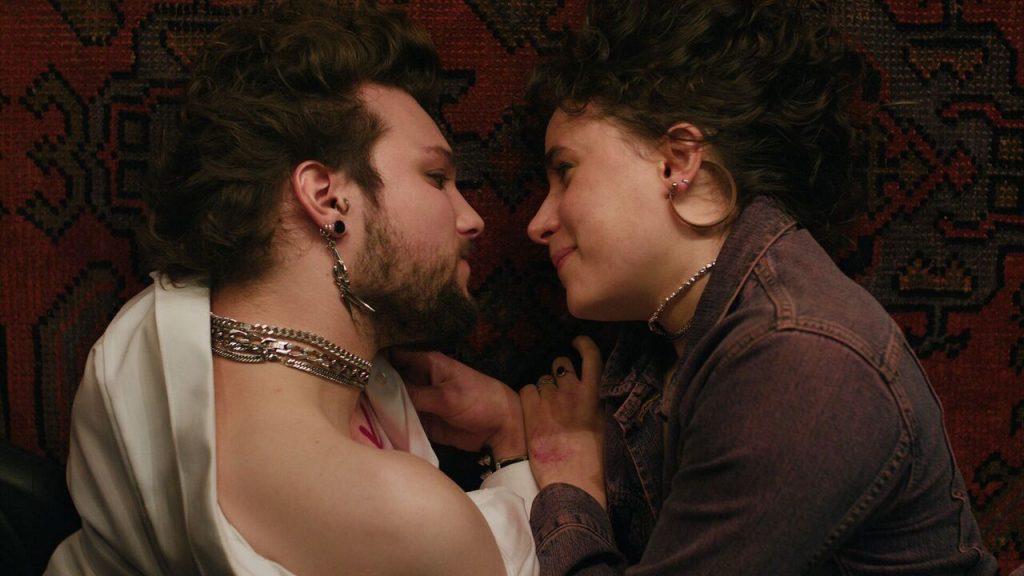
When I speak to Mari Sanders, I tell him how the film feels to me: bold, playful, deeply human for me and how rare it is to see a story that dares to be all three at once. Then I asked him where it began. What was the first image, the first sensation that made Stand Up real?
He laughs, and says “Oh, my God. That’s a very good question to start with and a very difficult one.” And then he goes back. Not to a script, but to a coffee.
It was there, he says, that the film first started to be shaped. Not in development rooms or outlines, but in conversation. With a person who would become central to the emotional architecture of the story.
“It was basically when I was in a café with Daan (Xander) who after that becomes one of the main characters. And we talked about Xander and about people with disabilities feeling about society, but also people with disabilities that really want to fight in society and the difference in coping mechanisms.”
The film, he explains, didn’t begin as concept. It began as contradiction. As disagreement. As repetition. As something that refused to stay theoretical.
“And then I of course know, okay, if Xander needs to be played by one, then this is my guy. So basically the film came alive in the cafe with Daan.”
What follows between them is not discovery alone, but recognition a collaboration that existed before the film formally existed at all and Daan is surprised about the story he didn´t knew before.
“You didn’t know that, actually. I never told you that.” Meanwhile Daan says: “No, but when was it? We had a lot of cafe dates. It was one of the cafe dates”.
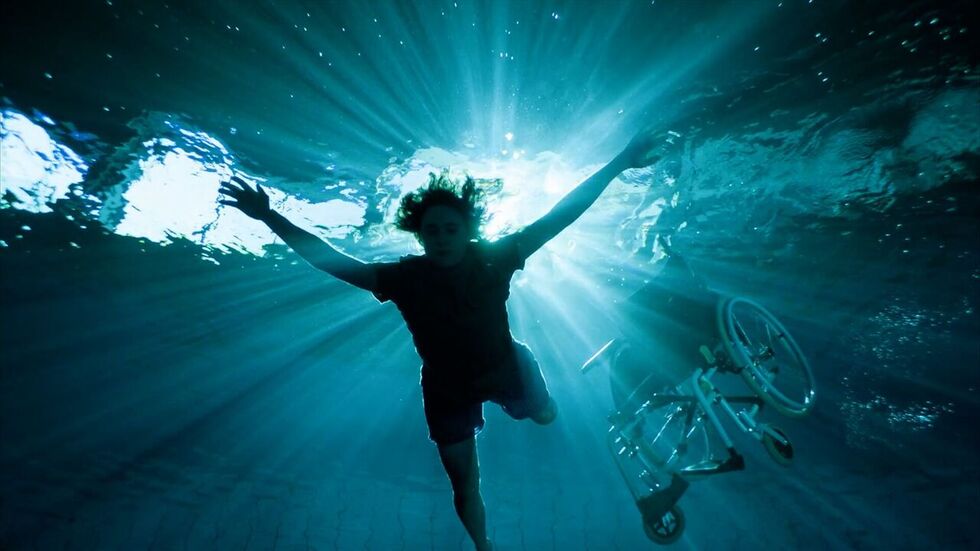
And Mari replied: “Yeah, when you were in your first year of theater. Oh, yeah. Remember?” He didn’t know either. So, thank you for the question. I love that.
When I turn to Daan Buringa, I told him that he is the point of inflection of Vera´s character and we reflected about the contradiction on how society demands you to be and how you want to be.
“Yeah, well, I’m feeling it myself, the contradiction. And I want to do everything in life and be part of society. And I’m thinking in my own life how I can accomplish things even through my disability. And to use it as a tool to get things out of life.”
When I ask how much Xander lives in him, he smiles at the number before he even says it.
“Maybe 70%.”
Mari laugh about it and says “I didn´t know was so much”. I continue to ask him about how he is related in real life to Stand Up Comedy (as his character) and to comedy in general.
“That’s a good question,” he answered. “I do a lot of stand-up comedy myself. And yeah, I love it. And I did theater school, acting school. And all my plays I made were a bit of stand-up comedy. All my roles become comedic without me even trying. So, it’s just… It’s there. And we have to do something about it, I think” he laughs.
Mari continued: “Yeah. But you have to tell the truth, because I wrote Xander as a failing comedian. And you didn’t like that in the beginning. Because even in the failing, it gets funny. It was always the step to be funny. And it was very hard. Yeah. We fought a lot about that.”
But beneath everything, there is a deeper insistence forming, that as an audience I think everyone can tell there is a multilayered film that doesn´t speak only about disability is goes way beyond that I say.
Mari names it directly.
“Strangely enough, this film is not about disability at all. It’s about vulnerability.”
He speaks about Vera and Xander as two people circling the same difficulty from different angles: the inability to be vulnerable, and the necessity of learning it anyway.
“The only thing that disability does is make it very visible,” he says, “this transition that we all go through in our human bodies.”
Daan completes the idea from within the story itself:
“At the end of the film, they finally understand that they need to be vulnerable towards each other to really make a next step in life.”
What Stand Up understands, subtle but brilliantly, is that connection, and real connection has to be from that place. The place where you can be vulnerable and fragile with each other to create something beautifully strong.
Later, the conversation opens into how the film was physically made, and suddenly the philosophy becomes structure.
Mari describes a set rebuilt around a different question, not what is efficient, but what is needed. “What do you need to perform? How can we help to perform?” The answer reshaped everything: time, space, rhythm, access, says Lisette Kelder ,the producer, that was listening to our conversation and kindly jumps in.
“Shorter days. Slower pace. Adjusted environments. Not as exception, but as method.” She affirmed. And somewhere in that redesign, something unexpected happened. “It became a better set for everybody.”
She says that even anger, fatigue, even limitation, all of it reorganized into something more livable. Daan adds a nuance that refuses generalization:
“For every actor it’s a whole unique story. So, it’s not that what I need other people also need in a wheelchair.”
And suddenly you realized so hard that accessibility is not a category. Relates to the ability to listen and understand others.
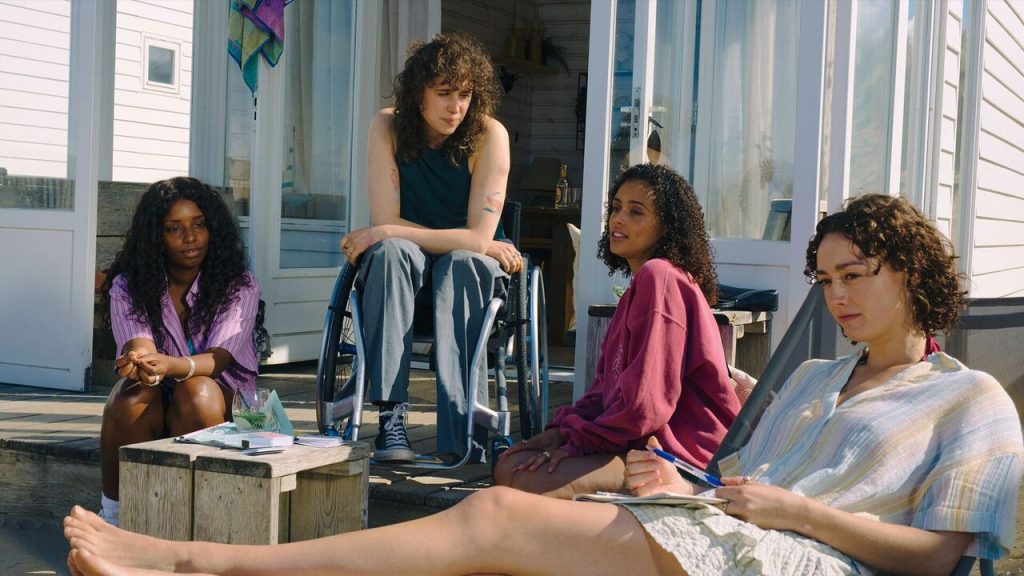
When asked what they learned from Xander, they went to a special place:
Mari speaks about anger: not as destruction, but as energy that gives shape to voice and Daan speaks about courage, of that moment before action, when hesitation turns into movement. Between them, Xander becomes something larger than character: a force of nature and inspiration, even with his punk rock inside him.
By the time the conversation reaches Tribeca itself, the film has already expanded beyond its frame.
“It feels like we are a family. And we do it together,” Mari says.
There was pride, but also uncertainty and the vulnerability of presenting a story that refuses familiar templates.
“I don´t know if the story we create gets beyond the disability… it was really nerve-wracking.” Says Daan.
But also something else:
“It’s very happy when you try something and also try to hack the narrative, and it gets recognized.”
That there are still walls between worlds that should already be connected. “There is a wall between the disabled community and the film industry,” Mari says. “And let’s turn down that wall.” He continued: “It’s the perspective of 15% of the world’s population. That’s a lot. So, there are so many stories out there that need to be told, and we can do it ourselves”
I ended the interview by telling them that I ended the movie with a big feeling of hope and thanking them for the deep conversation.
A must watch from the Tribeca Film Festival, that as I say in the review, we will see at the award season.